Nonlinear Narratives
There's a moment near the end of many great novels where you feel the floor tilt. You realize the sentence you're reading echoes the first line you read hours or days ago, and the whole book suddenly looks different — less like a line and more like a circle. That sensation, the quiet vertigo of a story folding back on itself, is one of the most distinctive pleasures fiction can offer. It's also one of the oldest tricks in the storyteller's toolkit.
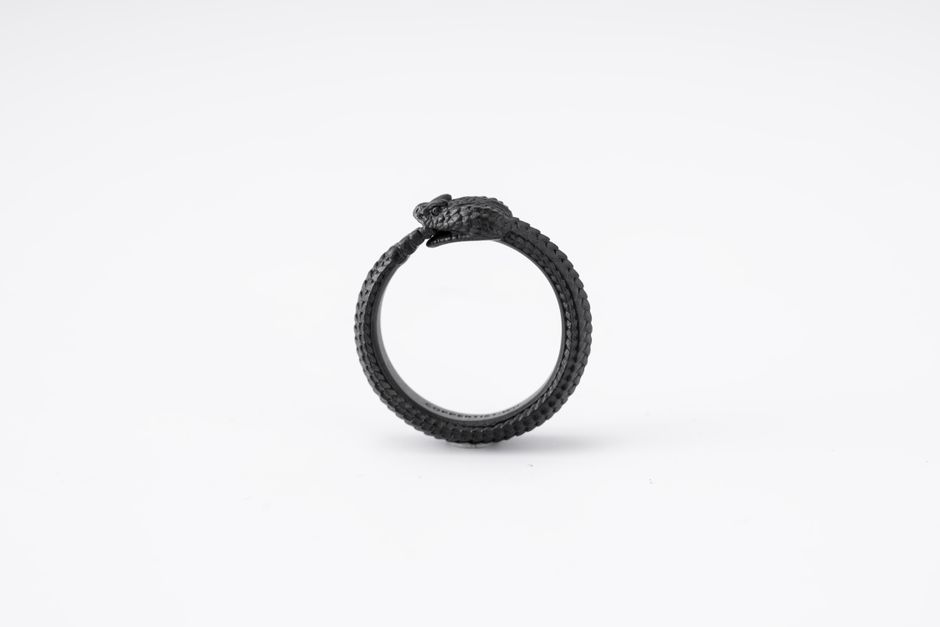
The ouroboros — the snake devouring its own tail — shows up in Egyptian, Greek, Norse, and alchemical traditions, usually as a symbol of eternity or cyclical renewal. But it's also a remarkably accurate diagram of how certain narratives work. A story that ends at its own beginning isn't just being clever. It's suggesting that the events in between weren't a straight path but a revolution, a turning, and that the characters (and readers) arrive back at the start changed even though the coordinates look the same.
Part of the power comes from memory. When a book's final page mirrors its first, your brain does something remarkable: it replays the entire reading experience in a compressed flash, reinterpreting early scenes in light of what you now know. A line that seemed innocent on page one becomes loaded on the last page. A character's casual remark becomes a prophecy. This retroactive illumination is unique to circular structures — a linear plot can surprise you, but only a looping one can make you re-read your own memory.
Writers who use this structure well tend to plant small asymmetries. The opening and closing might share imagery but shift the tense, the pronoun, or the emotional valence. A novel might begin with a character arriving somewhere in confusion and end with the same character leaving in understanding — same road, opposite direction. The circle isn't a closed trap; it's a spiral that looks like a circle from the side.
If you're new to circular narratives, a few strategies help. First, pay attention to first and last lines — literally mark them. Second, notice repeated objects, phrases, or gestures; they're often the hinges of the loop. Third, resist the urge to treat the ending as a resolution. In a circular story, the ending is often a return, and the real climax may have happened quietly in the middle while you were looking elsewhere.
Some readers find loops frustrating, and that's fair. A circle can feel like a trick, or worse, like a story refusing to commit to change. But the best circular narratives aren't saying nothing changes. They're saying change is not always visible from the outside. You can walk the same path twice and be a different person on the second pass — and the book, if it's built well, will make you feel that difference in your own reading body. That's the ouroboros effect: not stagnation, but transformation disguised as return.
