Nonlinear Narratives
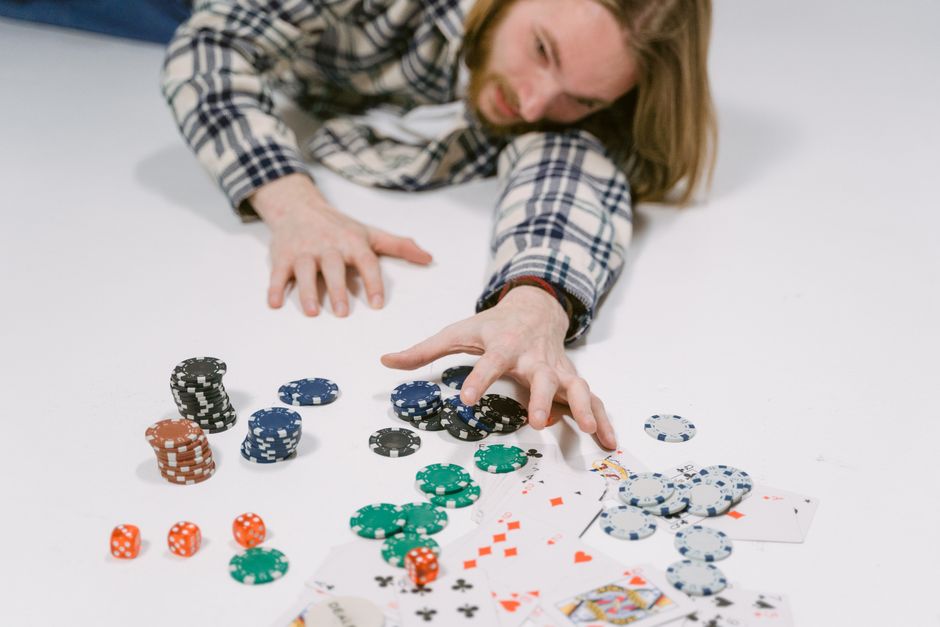
Ask ten gamblers why they keep coming back and you'll get ten different answers. Some chase the adrenaline of a six-figure slot jackpot. Others swear they've cracked the code to beating the bookmaker. A few just love the slow burn of a poker cash game where every decision matters. What unites them is a single uncomfortable question that nobody really wants to answer honestly: how much of this is actually in your control?
That question sits at the heart of the entire iGaming industry, and the answer changes dramatically depending on which game you're playing. Understanding where skill ends and luck begins isn't just academic — it directly affects how you should bankroll, which games are worth your time, and whether you're fooling yourself about your edge.
Most casual players think in binary terms: skill games versus luck games. Reality is far messier. Think of it as a sliding scale, and every casino product sits somewhere on it.
The gap between blackjack basic strategy and a slot machine isn't small — it's the difference between losing $2 per hour and losing $80 per hour on the same $10 average bet. That's not a rounding error. That's rent money.
Slot designers are brilliant at manufacturing the illusion of control. The stop button. The "skill stop" feature where you tap to nudge a reel. The bonus round where picking the right chest seems to matter. None of it does. Modern slot RNGs produce billions of outcomes per second, and the result is locked the moment you press spin. The animation is theater.
That's not a knock on slots. They're the most popular casino game on earth for a reason: the volatility is thrilling, the jackpots are life-changing, and the experience is designed to be entertaining. But if you're playing slots to "beat the system," you're playing the wrong game.
The one legitimate skill in slots is choosing which machine to play. RTP (return to player) varies wildly between titles. A 96% RTP slot versus an 88% RTP slot is a fourfold difference in expected loss over a long session. Reading the paytable, checking the RTP in the info screen, and favoring high-volatility machines when you have a big bankroll and low-volatility machines when you don't — that's real, if modest, edge.
Poker is the great exception. It's the only mainstream casino game where a skilled player can consistently beat a weaker field over thousands of hands. The house takes a rake, sure, but you're not playing against the house — you're playing against other humans, and humans leak money in predictable ways. For more on this, see สล็อตเว็บตรง.
Consider the math. A winning cash game player might earn 5 to 10 big blinds per 100 hands. At $1/$2 no-limit, that's $10-20 per hour. Sounds modest until you realize a losing recreational player bleeds $15-25 per hour in the same game. The transfer is direct. Poker isn't gambling in the same sense as roulette; it's a complex decision-making contest with variance attached.
That said, tournament poker is a different beast. The variance is brutal, and even world-class players can go dozens of tournaments without a deep run. The skill edge exists but expresses itself over hundreds of buy-ins, not a weekend.
Sports betting sits in a strange middle ground. On the surface, you're picking winners — pure prediction. In practice, you're competing against a market of sharp bettors and sophisticated algorithms that have already priced in every public variable. The closing line is ruthlessly efficient.
Here's what actually matters:
The practical takeaway is blunt. If you're playing slots or roulette, treat every dollar as an entertainment expense, not an investment. Set a session limit, stick to it, and never chase losses on a negative-EV game. The math doesn't care about your hot streak.
If you're playing blackjack, learn basic strategy. It takes an afternoon and cuts the house edge to roughly 0.5%, which is the difference between a slow bleed and a very slow bleed. If you're playing video poker, learn optimal play for Jacks or Better (99.54% RTP with perfect strategy) and never touch a machine that pays 6/5 on blackjacks.
If you're playing poker or betting sports, the opposite logic applies. Short-term losses are noise. What matters is whether your decisions were correct given the information available. A bad beat doesn't mean you played badly; a lucky win doesn't mean you played well. Track your results, review hand histories, and treat it like a part-time job if you want to actually win.
The iGaming industry thrives on a simple psychological truth: everyone believes they're the exception. The slot player believes the next spin is the one. The sports bettor believes the public is wrong. The poker player believes the fish at the table is someone else.
Sometimes that's true. But the disciplined player — the one who understands which games are beatable, which aren't, and what the actual mathematical expectation is on every wager — is the only one who survives long enough to find out. Luck decides individual sessions. Skill, math, and bankroll management decide everything else. Pick your games accordingly, because the house has been doing the math for centuries.
